Wisconsin slang is a set of regional words and phrases used mostly by people who live in or grew up in Wisconsin, including terms like “bubbler” (water fountain), “fib” (a small, harmless lie), “ope” (an apologetic exclamation), and “davenport” (a couch). Most of these words come from a mix of Upper Midwest dialect, Scandinavian and German immigrant influence, and old regional English.
Key Takeaways
- Wisconsin slang is a collection of regional words, not one single term “bubbler,” “ope,” “fib,” and “davenport” are some of the most common examples.
- Most terms come from Upper Midwest dialect roots, shaped by German and Scandinavian immigrant communities that settled the state in the 1800s.
- The tone is almost always friendly or neutral Wisconsin slang tends to be folksy rather than harsh or insulting.
If you’ve ever visited Wisconsin, or watched a video from someone who grew up there, you’ve probably run into a word that made you pause.
Someone asked where the nearest “bubbler” was. They said “ope” while squeezing past you in a grocery aisle. Maybe they told you they were “fibbing” about finishing their vegetables as a kid.
None of that is made up on the spot. It’s part of a real, recognizable set of regional expressions people search for as Wisconsin slang.
These words show up in everyday conversation across the state, and they’ve also spread online, where people from other states share them as quirky or charming examples of Midwest culture.
What Does Wisconsin Slang Mean?
Wisconsin slang refers to a group of regional words and phrases tied to the state’s culture, history, and dialect rather than a single term with one fixed meaning. It works more like a dialect fingerprint than a single slang word.
The state’s regional vocabulary includes everyday nouns that outsiders might not recognize (like “bubbler” for water fountain), verbal habits shaped by Scandinavian and German settlement patterns (like the exclamation “ope”), and softer, gentler versions of common words (like “fib” for a small lie).
Some of it overlaps with general Upper Midwest speech shared with Minnesota, Michigan, and parts of Iowa. Some of it is more specific to Wisconsin and a handful of neighboring communities.
The tricky part is that they sound like ordinary English, so an outsider might not even realize they’re hearing something regional until someone from a different state looks confused.
Quick Meaning Box
| Meaning | Simple Explanation | Tone | Common Age Group | Where It’s Used |
| Bubbler | Water fountain / drinking fountain | Neutral | All ages | Both |
| Ope | An exclamation said when bumping into someone or making a small mistake | Friendly/apologetic | All ages | Both |
| Fib | A small, harmless lie | Neutral, mildly negative | All ages | Both |
| Davenport | A couch or sofa | Neutral | Older generations more common | Offline |
| Bag | Plastic shopping bag (verb use varies regionally) | Neutral | Varies | Offline |
Pronunciation
- Bubbler BUB ler (rhymes with “tumbler”)
- Ope rhymes with “hope,” said quickly and softly
- Fib FIB, one syllable, rhymes with “rib”
- Davenport DAV en port
Where Does Wisconsin Slang Come From?
Most Wisconsin slang traces back to the waves of German and Scandinavian immigrants who settled the state in the 1800s, along with general Upper Midwest speech patterns.
Similar naming happened in a handful of other pockets of the country, but Wisconsin is one of the places where it held on the longest.
“Ope” doesn’t have one clean origin story. Linguists who study Upper Midwest speech generally connect it to a broader regional habit of using soft, quick interjections to smooth over small social moments bumping into someone, interrupting, or making a minor mistake.
“Davenport” is older still. It comes from a furniture company and product name from the 1800s that became so common in American homes that the brand name eventually became a generic word for “couch” in some regions, similar to how “Kleenex” became shorthand for tissue.
It has mostly faded outside a few pockets of the Midwest, including parts of Wisconsin.
History of the Term
In the early to mid 1900s, words like “bubbler” and “davenport” were just ordinary vocabulary, not slang at all. People didn’t think of them as regional; they were simply the normal word for the object.
“Ope” followed a different path. It stayed mostly informal and spoken for decades, rarely written down, which is part of why it’s hard to pin an exact origin date on it.
Its jump to internet fame happened much later, when people outside the Midwest started noticing it in videos, memes, and social posts and found it charming enough to share. That online spread introduced the word to audiences who had never lived anywhere near Wisconsin.
Some terms have faded. Younger residents are less likely to say “davenport” than their grandparents were, favoring “couch” or “sofa” instead.
How People Use It Today
Wisconsin slang shows up constantly in casual, spoken conversation, and increasingly in texting and social media captions where people lean into their regional identity for fun. It’s less about performing an accent and more about word choice.
On platforms like TikTok and Instagram, Wisconsin natives (and other Midwesterners) sometimes post “you know you’re from the Midwest when” style content, and slang words like “ope” or “bubbler” show up as punchlines or captions.
Reddit threads about regional dialects also bring these words up regularly, often with people from other states asking what they mean.
Offline, the usage is even more natural. Locals use “bubbler,” “fib,” and “ope” without thinking twice, the same way anyone uses ordinary vocabulary. It only becomes noticeable when someone from outside the region reacts to it.
How Different Generations Use It
Older Wisconsin residents are more likely to use words like “davenport,” while younger residents tend to default to more universal terms like “couch,” even if they still recognize the older word.
“Fib” also holds steady across age groups. It’s a word many people learn as kids, from parents gently correcting a small lie, and it tends to stick with people into adulthood regardless of generation.
Wisconsin Slang Words
If you’re looking for a quick list, here are some of the most recognizable Wisconsin slang words and what they mean:
- Bubbler a water fountain
- Fib a small, harmless lie
- Ope a soft exclamation said after bumping into someone or making a small mistake
- Davenport a couch or sofa
- Up North a general term for Wisconsin’s northern vacation areas, especially around lakes
- Ba sometimes used informally to mean “leave” or “go,” depending on the sentence and region
- Hotdish a casserole style baked dish, more common just across the border in Minnesota but heard in parts of Wisconsin too
- Stop and go lights an older, folksy way of referring to a traffic light
These words are the backbone of most “Wisconsin slang words” searches, and they’re the ones most likely to actually come up if you spend time talking to someone from the state.
Bubbler: Wisconsin Slang for Water Fountain
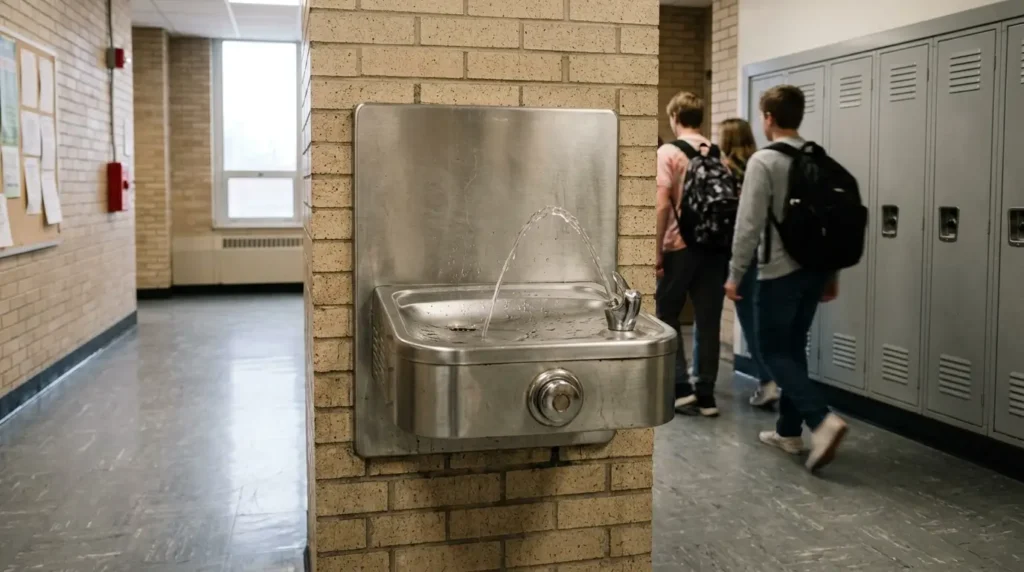
“Bubbler” is the Wisconsin word for what most of the country calls a water fountain or drinking fountain.
The word isn’t unique to Wisconsin. Parts of Massachusetts and Rhode Island also use “bubbler” for the same thing, likely tied to a similar drinking fountain design history rather than any direct connection between the regions. But within the Midwest, Wisconsin is by far the strongest holdout for the term.
Ask someone from Wisconsin where the bathroom is and they might casually mention “there’s a bubbler right next to it” without a second thought and if you’re not from the area, that sentence might briefly confuse you.
Wisconsin Slang “Ope”

“Ope” is a short, quick exclamation said when someone bumps into another person, almost drops something, interrupts, or needs to squeeze past someone in a tight space. It functions like a mini apology packed into one syllable.
A typical use looks like this: someone reaches for the same item on a shelf as another shopper, says “ope, sorry,” and moves on without breaking stride. It’s less a formal apology and more a social reflex, tied closely to Midwest Nice, the regional habit of prioritizing politeness and avoiding conflict or awkwardness.
What Does Fib Mean in Wisconsin Slang?
“Fib” means a small, harmless lie something said to avoid trouble or embarrassment rather than to seriously deceive someone. It’s not unique to Wisconsin;
A kid telling a parent they brushed their teeth when they didn’t is fibbing. Someone saying they’re “on their way” when they haven’t left the house yet is fibbing.
It’s a softer, gentler word than “lie,” which is part of why it’s often used with kids or in lighthearted conversation between friends.
Whats a fib in Wisconsin slang, in short: it’s not a serious accusation. Calling something a fib usually takes the edge off, framing it as a small, forgivable slip rather than dishonesty with real consequences.
Wisconsin Slang for Illinois People
It’s typically used in a teasing, half serious way, especially around Wisconsin’s tourist towns near the Illinois border and around Lake Geneva, where Illinois visitors are common in the summer.
The term overlaps in spelling with “fib” (the small lie word), which sometimes causes confusion online, but the two are unrelated in meaning.
One is about lying; the other is a regional nickname tied to state rivalry and light teasing between neighboring states.
Wisconsin Slang Insults
Wisconsin slang doesn’t lean heavily on harsh insults the way some regional dialects do. Most of the state’s slang has a friendly, folksy tone rather than a sharp or mean one, which fits with the broader “Midwest Nice” reputation.
That said, there are a few mild, teasing terms:
- FIB the joking nickname for Illinois visitors mentioned above
- Cheesehead sometimes used self deprecatingly by Wisconsinites, and occasionally by outsiders in a mocking tone, referring to the state’s dairy and cheese culture and the foam cheese wedge hats worn by Green Bay Packers fans
- Yah, no or No, yah not really an insult, but a confusing phrase to outsiders that can sound dismissive if you don’t know it usually just means agreement or soft disagreement depending on context
Compared to slang from other regions, Wisconsin’s version of an “insult” is often closer to gentle teasing than anything genuinely harsh.
Wisconsin Slang Quiz
Try testing yourself before scrolling down to the Quick Practice section later in this guide. Ask yourself:
- What would a Wisconsin local call a water fountain?
- What does it mean if someone says they “fibbed” about something?
- What would you say if you accidentally bumped into someone in a Wisconsin grocery store?
- What piece of furniture does “davenport” refer to?
If you can answer all four without scrolling, you’ve basically got the fundamentals of Wisconsin slang down. The full self check with an answer key is further down in this article.
Davenport: Wisconsin Slang for Couch
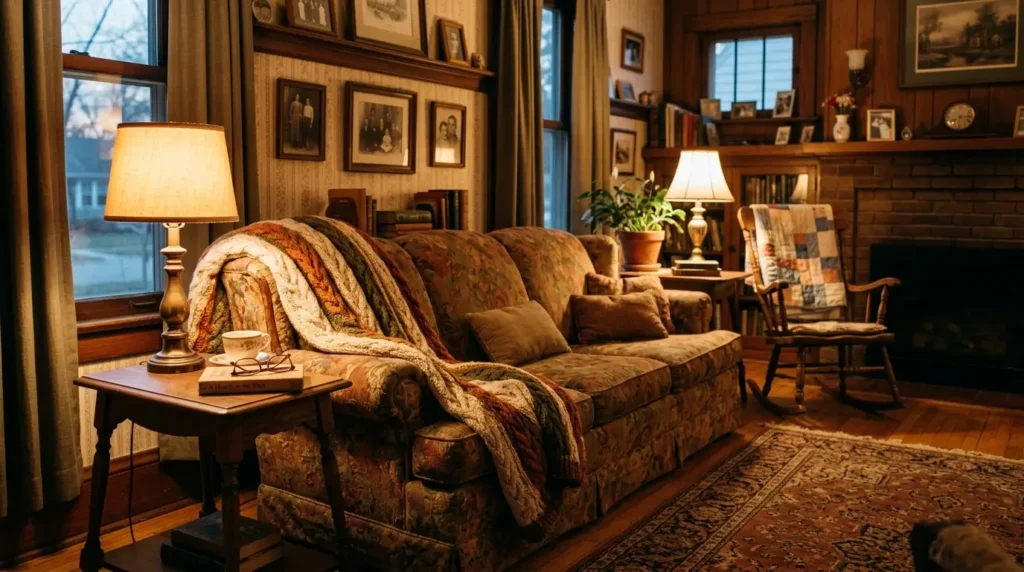
“Davenport” is an older term for a couch or sofa, still used by some Wisconsin residents, especially older generations.
It comes from a furniture brand name that became generic over time, similar to how some brand names eventually become the default word for an entire category of product.
It hasn’t disappeared completely, though it still shows up in casual conversation, especially in smaller towns and among older speakers, and people searching “davenport Wisconsin slang” are usually trying to confirm they heard the word correctly from an older relative or neighbor.
Funny Wisconsin Slang Words
Some Wisconsin slang earns a reputation for being funny mostly because of how unexpected it sounds to outsiders, not because the words themselves are jokes. A few that tend to get a laugh or a confused look from visitors:
- Bubbler sounds almost like a made up word to non Midwesterners
- Ope often imitated online because of how automatic and universal the reflex feels once people recognize it in themselves
- Stop and go lights an old fashioned, oddly literal way to describe a traffic light
- Yah, no and No, yah genuinely confusing phrases that sound contradictory but usually aren’t
None of these are insults or jokes at someone else’s expense. The humor mostly comes from the gap between how normal these words sound to a Wisconsinite and how unfamiliar they are to everyone else.
Common Wisconsin Slang
If you had to memorize a short list before a trip to Wisconsin, this would be it: bubbler, ope, fib, davenport, up north, and cheesehead.
These six terms cover the vast majority of everyday Wisconsin slang you’re likely to actually hear in conversation, rather than just read about online.
Most other Wisconsin slang terms are either more localized to specific towns, less frequently used, or shared broadly across the whole Upper Midwest rather than unique to Wisconsin specifically.
Examples in Everyday Conversation
- “Can you fill up my water bottle at the bubbler by the gym?”
- “Ope, sorry, didn’t see you there.”
- “He fibbed about finishing his homework.”
- “Grab a blanket and sit on the davenport, it’s cold in here.”
- “We’re heading up north for the weekend to the cabin.”
- “Ope, let me just squeeze right past ya.”
- “Don’t fib to your mother, just tell her the truth.”
- “My grandma still calls it a davenport, it’s kind of cute.”
- “Careful, that new stoplight is right where the old stop and go lights used to be.”
Text Message Examples
- “meet me by the bubbler outside the gym”
- “ope lol sorry just saw ur text”
- “stop fibbing, i know u didn’t study”
- “come over, we can just chill on the davenport”
- “heading up north this weekend, service might be spotty”
- “ope my bad, wrong group chat”
- “he’s such a FIB, illinois plates everywhere this weekend”
- “no fibbing, did you actually walk the dog”
- “ope one sec, gotta grab water from the bubbler”
- “yah no i can’t make it tonight, sorry”
Social Media Caption Examples
- Instagram: “Bubbler run before practice 💧”
- TikTok: “POV: you say ope for the 47th time today”
- X: “Just fibbed my way out of a Zoom meeting, no regrets”
- Threads: “Nothing beats a nap on the davenport on a rainy day”
- Facebook: “Heading up north for the weekend, see y’all Monday!”
- Instagram: “Ope, didn’t mean to post that lol”
- TikTok: “Explaining what a bubbler is to my out of state roommate”
- X: “Cheeseheads assemble 🧀”
- Threads: “Told a tiny fib to get out of dish duty tonight”
- Facebook: “Stopped by the old davenport shop downtown, brings back memories”
Is It Positive or Negative?
Most Wisconsin slang carries a neutral to positive, friendly tone. Words like “bubbler,” “davenport,” and “up north” are simply everyday vocabulary, with no emotional charge at all. “Ope” leans gently positive, tied to politeness and self deprecating humor.
“Fib” is the one word with a slightly negative edge, since it does describe lying but it’s a soft, minimized version of that idea, usually used to describe something small and forgivable rather than a serious deception. Calling something a fib rather than a lie is, in a way, a kindness in itself.
“FIB” (the Illinois nickname) can come across as either playful teasing or mildly annoyed, depending on tone and context, especially during peak tourist traffic near the Wisconsin Illinois border.
Who Uses This Slang?
Outside Wisconsin, the slang gets picked up mostly by people interested in regional dialects, Midwest culture content online, or visitors and transplants trying to understand locals.
It occasionally shows up in broader Midwest content since several of these words (like “ope”) are shared with Minnesota, Michigan, and parts of Iowa.
Similar Slang Words
| Slang | Meaning |
| Ope (general Midwest) | Same apologetic exclamation, used across several Midwest states |
| Pop | Regional Midwest word for soda/soft drink |
| Uff da | A Scandinavian rooted Midwest exclamation of surprise or exhaustion |
| Hotdish | A casserole style dish, more associated with Minnesota but heard in parts of Wisconsin |
| Yooper slang | Related regional dialect from Michigan’s Upper Peninsula, sharing some Wisconsin traits |
Opposite Words
Since Wisconsin slang isn’t built around one single meaning, “opposites” work best when applied to individual terms:
- Fib vs. Truth a fib is a small lie; its opposite is simply being honest
- Ope vs. Silence/No acknowledgment “ope” is a small social gesture; its opposite would be bumping into someone and saying nothing at all
- Davenport vs. Couch not truly opposite, but “couch” is the more modern, universal alternative
Common Mistakes
Context is the easiest way to tell them apart if someone’s talking about honesty, it’s the lie meaning; if they’re talking about license plates or tourists, it’s the Illinois nickname.
Outside Wisconsin (and a couple pockets of New England), most people will have no idea what it means and may assume you’re talking about something else entirely, like a bong or a fountain feature.
Finally, people sometimes assume “davenport” is a place name rather than a furniture term, since Davenport is also a real city in Iowa. Context usually makes the difference clear, but it can cause a moment of confusion in text or writing.
When NOT to Use It
Skip Wisconsin slang in professional emails, formal writing, school assignments, job interviews, and any business context where clarity matters more than regional flavor.
It’s also worth avoiding in customer facing writing meant for a national or international audience, since regional slang can confuse readers outside the Midwest and make instructions or communication less clear than plain, standard English would be.
Fun Facts
- “Bubbler” is also used in parts of Massachusetts and Rhode Island, not just Wisconsin.
- “Davenport” comes from a 19th century furniture brand name that became a generic term over time.
- “Ope” is shared across several Upper Midwest states, not just Wisconsin.
- The “FIB” nickname for Illinois visitors is especially common around Lake Geneva and other summer tourist areas near the state border.
- Several Wisconsin slang terms overlap with general “Midwest Nice” communication habits rather than being fully unique to the state.
Frequently Asked Questions
1:What are some common Wisconsin sayings?
Beyond single slang words, Wisconsinites use a handful of full sayings too, like “you betcha” (an enthusiastic yes), “up north” (referring to vacation areas, usually involving a lake or cabin), and “yah, no” or “no, yah” (soft ways of agreeing or gently disagreeing without sounding blunt).
These sayings are less about vocabulary and more about the state’s overall conversational style, which tends to favor politeness and indirectness over bluntness.
2:What is a fib Wisconsin slang for?
“Fib” refers to a small, harmless lie, and in Wisconsin it’s commonly used in a lighthearted way, especially with kids or between friends.
Unlike a serious lie, a fib is usually forgivable and low stakes like saying you already ate when you actually skipped a meal to avoid a longer conversation.
3:What are some slang phrases?
Outside single words, Wisconsin conversation includes short phrases like “up north” for lake vacation areas, “stop and go lights” for traffic lights, and “you betcha” as an enthusiastic way of saying yes.
These phrases tend to carry more of the state’s overall tone friendly, a little old fashioned, and rooted in small town rhythms than single slang words do on their own.
4:Do they say “eh” in Wisconsin?
Wisconsin’s closest equivalent filler or tag expressions are “yah, no,” “you betcha,” and “ope,” which serve similar conversational functions softening statements and inviting agreement but sound and function differently from the Canadian “eh.”
Final Thoughts
Wisconsin slang isn’t one single word with a deep secret meaning. It’s a whole collection of small, everyday expressions shaped by the state’s history, its immigrant roots, and its famously polite conversational style.
Some of these terms are fading with younger generations, while others, like “ope,” have found a whole new life online, reaching audiences who’ve never set foot in the Midwest.
Either way, this collection of words says a lot about Wisconsin itself practical, a little old fashioned, and consistently kind in how it talks.
Next time someone says “ope” while reaching past you for the last item on a shelf, or asks where the nearest bubbler is, you’ll know exactly what’s going on.

Chloe Mitchell is passionate about digital communication and the stories behind viral words. She writes for SlangGuide.com, helping readers discover the meanings, origins, and everyday use of popular slang terms.