Tuff is slang for something cool, awesome, tough, or impressive. It’s a playful spelling of “tough” used to praise a person, outfit, song, or moment. Depending on tone, it can also describe someone who is emotionally strong or hard to deal with. Context decides which meaning fits.
Key Takeaways
- Core meaning: Tuff usually means cool, impressive, or awesome.
- Spelling: It’s a stylized version of the word “tough.”
- Origin: Rooted in older slang from the mid 1900s, with newer internet driven use today.
- Current usage: Popular in casual texting and social media captions.
- Tone: Mostly positive, though it can describe a hard situation depending on context.
- Who uses it: Teens, Gen Z, and casual online communities.
People search “what does tuff mean in slang” because they saw the word somewhere unexpected. Maybe it showed up in a text, a comment section, or a caption under a photo. It looks like a typo for “tough,” but it’s not always used that way.
This word pops up most in casual writing. You’ll spot it in group chats, on TikTok, and in quick replies on social media. Some readers assume it’s a mistake. Others recognize it as a compliment.
Is it still used today? Yes, though it shows up more in certain corners of the internet than others. It tends to appear in younger, casual conversations rather than formal writing.
This guide breaks down every angle of the word tuff. You’ll learn what it means, where it likely came from, how people use it now, and when to avoid it. By the end, you won’t need to look it up anywhere else.
What Does Tuff Mean in Slang?
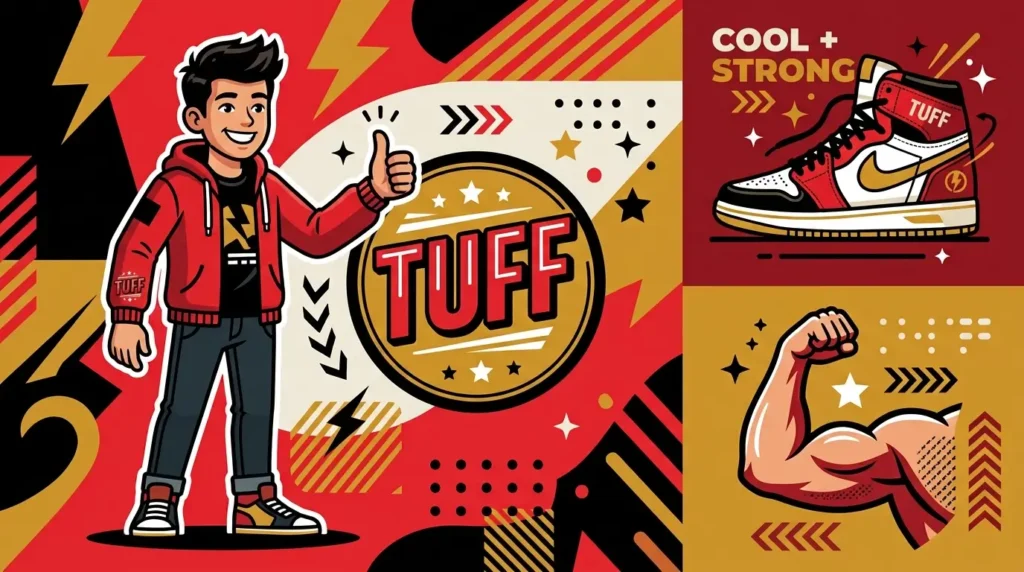
Tuff is a casual way to say something is cool, awesome, or impressive. It can also describe someone who is tough, strong, or hard to push around.
The word works as both a compliment and a description of strength. If someone says “that’s tuff,” they usually mean they’re impressed. If someone says “she’s tuff,” they might mean she’s strong willed or not easily bothered.
Here are a few quick examples:
- “That new sneaker drop is tuff.” (Meaning: cool, impressive)
- “He stayed calm through all that. He’s tuff.” (Meaning: mentally strong)
- “This song is tuff.” (Meaning: really good)
The exact meaning shifts a little based on what it’s describing. A person can be tuff in a strength sense. A thing, like a song or outfit, is usually tuff in the “awesome” sense.
Quick Meaning Box
| Meaning | Simple Explanation |
| Cool or awesome | Used to praise something impressive, like a song, look, or moment |
| Tough or strong | Describes a person who handles pressure well |
| Difficult (situational) | Occasionally used to describe a hard or rough situation |
Pronunciation
Tuff is pronounced the same as the word “tough”: /tʌf/, rhyming with “puff” or “stuff.” The spelling is stylized, but the sound doesn’t change from the original word.
Where Does Tuff Come From?
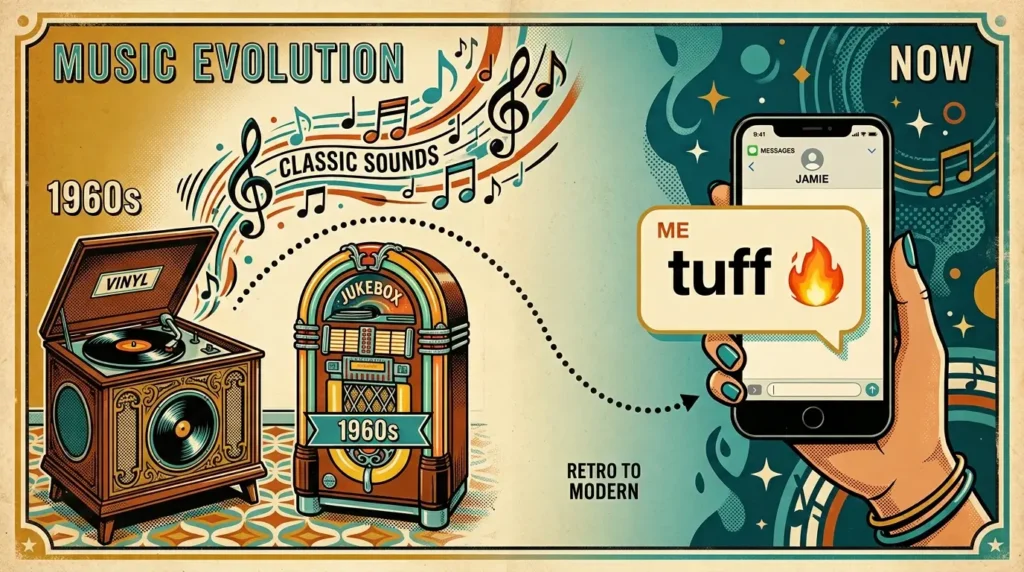
Tuff comes from a playful respelling of “tough,” a word that has described strength and toughness for centuries.
The exact origin of the slang spelling is unclear, but the shortened, phonetic style fits a long pattern of slang that respells common words for style or emphasis.
Respelled slang isn’t new. Words get simplified or restyled in casual speech all the time, especially in music, youth culture, and informal writing.
Tuff likely followed that same path, starting as a stylistic twist on “tough” before picking up its own casual meaning tied to being cool or impressive.
Because slang spreads informally through speech, text, and social platforms rather than official records, it’s hard to pin down one exact moment or person who started using it this way.
What’s clear is that the word has stuck around because it’s short, easy to type, and carries a punchy, casual tone.
History of the Term
Tuff as a word spelling has old roots. Slang and music writing going back to the 1960s used “tuff” as a stylistic nod to “tough,” often to describe something cool or stylish, like music or fashion. That early use laid the groundwork for the word’s positive, complimentary tone.
Slang doesn’t move in a straight line. Words often fade out of common use, only to resurface later with a fresh meaning shaped by new generations.
Tuff followed that same rhythm. After its earlier appearances, it saw a modern resurgence through texting and social media, where quick, casual spellings spread fast.
Today, the word carries both of its old meanings, cool and tough, while fitting comfortably into fast paced digital conversations.
How People Use It Today

People use tuff mostly in texting, comments, and casual captions rather than formal writing. It shows up when someone wants a quick, punchy way to say something is impressive or that a person is strong.
On TikTok, tuff often appears in comment sections reacting to videos, outfits, or clips. On Discord and gaming chats, it’s used to hype up a play, a win, or someone’s setup.
On X and Instagram, it shows up in captions or quick replies where a short compliment fits better than a long sentence.
It’s rarely used in essays, emails, or anything meant to sound polished. It belongs to fast, casual conversation.
What Does Tuff Mean in Slang on TikTok?
On TikTok, tuff usually means something is cool, impressive, or well done. Commenters use it to react quickly to videos, transitions, outfits, or talent.
A comment like “this edit is tuff” means the video editing looks impressive. “Bro is tuff for that” often praises someone’s actions or confidence in a clip.
TikTok’s fast comment culture favors short slang like this because it gets a reaction across in just a few characters.
What Does Tuff Mean in Slang on Urban Dictionary?
On Urban Dictionary, tuff is generally defined as slang for cool, awesome, or excellent, with some entries also tying it to being tough or strong.
User submitted slang sites like this reflect how everyday people define words based on their own experience, not official research.
Because anyone can submit a definition, entries can vary in tone and detail. Still, most line up with the everyday meaning most people already associate with the word: something impressive or someone who’s mentally strong.
What Does Tuff Mean in Slang Terms?
In general slang terms, tuff functions as an adjective that praises something or someone. It swaps in for words like “cool,” “awesome,” “solid,” or “tough,” depending on the sentence.
It’s flexible enough to describe objects, people, moments, or even reactions. That flexibility is part of why it’s stuck around across different decades and platforms.
What Does Tuff Mean in 1960s Slang?
In 1960s slang, tuff was used to describe something stylish, cool, or excellent, especially in music and youth culture at the time.
It carried a similar complimentary tone to how it’s used today, just tied to the trends and voice of that decade.
This earlier use shows the word isn’t a brand new internet invention. It has history, even if today’s usage feels shaped mostly by texting and social media.
What Does Tuff Mean in Slang in 2025?
In 2025, tuff continued to mean something cool or impressive, especially in short form video comments and casual texting. Its meaning didn’t shift much from previous years, but its usage stayed steady in youth driven online spaces.
Short, punchy slang like this tends to stay useful because it fits perfectly into comment sections and quick replies, where space and time are limited.
What Does Tuff Mean in Slang in 2026?
Heading into 2026, tuff still holds its core meaning of cool, awesome, or strong. Slang terms with staying power like this usually stick around because they’re simple, easy to say, and adaptable to new trends without needing a definition refresh.
Expect the word to keep showing up the same way it has: as a quick compliment or a nod to someone’s toughness.
What Does So Tuff Mean in Slang?
“So tuff” is simply an emphasized version of tuff, meaning extremely cool or impressive. Adding “so” boosts the compliment, similar to saying “so cool” or “so good.”
Example: “That performance was so tuff” means the performance was especially impressive, more so than just saying it was “tuff” on its own.
What Does Tuff Mean in Gen Z Slang?
In Gen Z slang, tuff means cool, awesome, or impressive, and it’s used casually across texting and social apps. It fits into a broader Gen Z habit of respelling or shortening words for a more casual, expressive tone.
Gen Z slang often favors quick, low effort typing that still carries strong emotional punch. Tuff checks both boxes: it’s short and it clearly signals approval or admiration.
What Does the Word Tuff Mean in Slang?
As a standalone word, tuff means cool, impressive, or tough, depending on the sentence around it. It’s an adjective, meaning it describes a noun, If that’s a person, an object, a song, or a moment.
Most native speakers of slang instantly recognize the compliment version first, since that’s the more common everyday use.
What Does Not Tuff Mean in Slang?
“Not tuff” simply reverses the compliment, meaning something is not cool, not impressive, or disappointing. It’s a quick way to shut down or dismiss something without a long explanation.
Example: “That remake was not tuff” means the remake fell flat or didn’t live up to expectations.
What Does TS Tuff Mean in Slang?
“TS” is commonly used online as shorthand for “that’s” or, in some contexts, a dismissive abbreviation tied to other slang phrases.
When paired with tuff, “ts tuff” typically reads as a shortened way of saying “that’s tuff,” keeping the same cool or impressive meaning, just typed faster.
Shorthand like this is common in fast texting, where full words get trimmed down whenever possible.
Examples in Everyday Conversation
- “Did you see his new car? That’s tuff.”
- “She handled that breakup so well. She’s tuff.”
- “This burger place is actually tuff.”
- “That comeback you made was tuff, ngl.”
- “He stayed calm during the whole interview. Tuff.”
- “Not gonna lie, that outfit is tuff.”
- “That was a tuff play in the fourth quarter.”
- “She’s been through a lot, but she’s tuff.”
- “This new album is tuff from start to finish.”
- “That’s a tuff way to handle criticism.”
Text Message Examples
- “bro that fit is tuff 🔥”
- “ngl this song is tuff”
- “she’s tuff for staying calm through that”
- “that edit u made is tuff”
- “not tuff, that ending was mid”
- “so tuff that you pulled that off”
- “ts tuff, send me the link”
- “your setup is tuff man”
- “that comeback was tuff lol”
- “tuff win last night”
Social Media Caption Examples
- Instagram: “New fit, feeling tuff today ✨”
- TikTok: “This transition is tuff, watch till the end”
- X: “That performance last night was tuff, no notes”
- Threads: “Not gonna lie, this take is tuff”
- Facebook: “Proud of my daughter, she’s tuff through everything”
- Instagram: “This view is tuff 🌅”
- TikTok: “Bro said something tuff in this clip”
- X: “Tuff game from start to finish”
- Threads: “That edit deserves more love, it’s tuff”
- Facebook: “Tuff milestone for the team this year”
Is It Positive or Negative?
Tuff is mostly a positive word. It’s used to praise something or someone, If that’s an outfit, a song, a performance, or someone’s strength under pressure.
It can turn negative only in specific contexts, like “not tuff,” which flips the meaning into a mild insult or letdown. On its own, though, “tuff” almost always signals approval.
Misunderstandings can happen if someone reads it as a typo for “tough” in the traditional sense, like describing something as difficult or harsh. Context usually clears up the confusion within a sentence or two.
Who Uses This Slang?
Tuff is used mostly by teens and younger adults, especially in casual texting, gaming chats, and social media comments. It also shows up in music related conversations, where fans use it to praise songs, performances, or artists.
Older generations may recognize it from earlier decades, particularly if they grew up around 1960s slang, where tuff carried a similar cool, stylish meaning.
Gamers and online communities also use it often, since short, punchy compliments fit naturally into fast paced chats.
Similar Slang Words
| Slang | Meaning |
| Fire | Something excellent or impressive |
| Solid | Good, reliable, or well done |
| Goated | The best at something |
| Cracked | Extremely skilled, often in gaming |
| Built different | Uniquely strong or impressive |
Opposite Words
- Mid Describes something average or unimpressive, the opposite of praising it as tuff.
- Trash Used to say something is bad or poorly done.
- Weak The opposite of the “strong” meaning of tuff.
- Lame Describes something boring or uncool.
Common Mistakes
People sometimes confuse tuff with the standard word “tough,” assuming it always means difficult or harsh. In slang, it usually means the opposite: something impressive or cool.
Another common mistake is spelling it as “tuf” or “tough” when trying to use the slang version, which changes the casual, stylized feel of the word.
Some readers also misread “not tuff” as a compliment instead of a dismissal, since the sentence structure can look similar to a positive statement at first glance.
When NOT to Use It
Avoid using tuff in professional emails, school assignments, resumes, or formal writing. These settings expect standard English, and slang like this can come across as unprofessional or confusing to readers who aren’t familiar with it.
Business messages, cover letters, and academic papers should stick to clear, standard language. Save tuff for texting, social captions, and casual conversations with friends where the tone is already relaxed.
Fun Facts
- Tuff is a stylized respelling of the word “tough.”
- Its slang use as “cool” or “stylish” dates back to at least the 1960s.
- It works as both a description of objects and people.
- “Not tuff” reverses the compliment into a mild insult.
- The word pairs naturally with intensifiers like “so” for emphasis.
- It appears more in casual texting and comments than in formal writing.
Frequently Asked Questions
1:Is tuff Gen Z slang?
Tuff is popular among Gen Z, but it’s not exclusively theirs. It has roots stretching back to earlier decades, particularly the 1960s, where it carried a similar cool or stylish meaning.
Gen Z helped bring it back into everyday use through texting and social media, giving it a fresh wave of popularity. So while Gen Z uses it often, the word itself is older than that generation, making it more of a revived slang term than a brand new one.
2:What does it mean when a guy says that’s tuff?
When a guy says “that’s tuff,” he’s usually giving a compliment, meaning he thinks something is cool, impressive, or well done.
It could be about an outfit, a decision, a performance, or even how someone handled a tough situation. The tone is casual and approving.
It’s rarely meant as criticism unless paired with “not,” which flips the meaning entirely into a letdown or disappointment.
3:What does she’s tuff mean?
“She’s tuff” usually praises a woman’s inner strength, resilience, or ability to handle pressure well. It’s often said about someone who stayed calm during a hard situation or pushed through something difficult without complaining.
Less commonly, it can also just mean she’s impressive or cool in a general sense, depending on the conversation.
The strength based meaning is more common when describing a person rather than an object or moment.
4:Why do kids say “tuff”?
Kids and teens use tuff because it’s short, easy to type, and instantly understood within their social circles. Slang like this often spreads through texting, gaming chats, and social media comments, where quick reactions matter more than full sentences.
Using tuff also signals that someone is in tune with casual online language. It’s an easy way to react to something impressive without writing out a longer compliment.
Final Thoughts
Tuff is a small word with a lot of flexibility. Most of the time, it’s a quick way to say something is cool, impressive, or worth noticing. It can also praise someone’s strength, especially when they’ve handled a hard situation well.
The word has been around longer than most people realize, stretching back to earlier slang decades before circling back through modern texting and social media.
If you see it in a caption, a text, or a comment section, it almost always carries a positive tone.Keep it casual, though. Save it for friends, texts, and social posts rather than anything formal.

Ethan Parker explores online culture and emerging language trends from around the world. Through SlangGuide.com, he turns confusing internet phrases and slang into easy to understand guides for curious readers.